
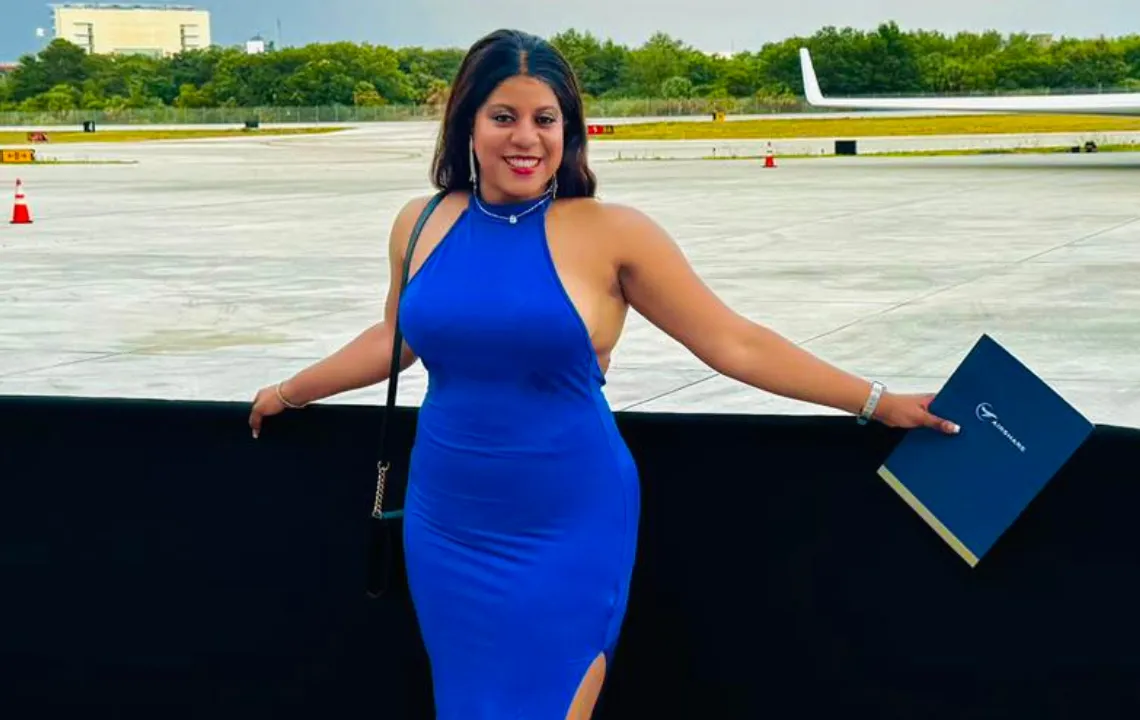
Mary Blake takes the stress out of business travel
Business travel looks good when you’re watching somebody else do it.
But when it’s you? It’s early flights, tight layovers, TSA headaches, and that familiar feeling of showing up tired… then being expected to perform like you’ve been resting all week.
That’s the part nobody brags about.
And that’s why this episode of The Kenn Rashad Show hits differently. I sat down with Mary Blake, Co-Founder and CEO of Trvl-Pro, a concierge travel service built to take the stress out of business travel. Mary is a healthcare professional turned entrepreneur who believes travel isn’t just a luxury; it can be a tool for wellness, productivity, and personal reset.
And full disclosure—she’s also my cousin.
So yes, the conversation had the business insight. But it also had the family energy. The kind that makes interviews feel like real life.
Watch the entire episode.
“We help businesses reduce the hassle and stress around travel.”
Trvl-Pro isn’t a travel agency. Mary made that clear.
It’s a B2B concierge service for companies whose employees travel frequently—or for businesses with clients who travel and need the experience handled with care and precision.
Instead of employees packing last-minute, ordering random items, or piecing everything together on the fly, Mary’s team steps in and takes over the details.
“We work with businesses that have employees who travel frequently… and they’re looking for ways to reduce the hassle and stress of the planning around travel,” she said.
That includes essentials, but also the part most companies overlook: the small, stressful moments that add up.
Mary explained that clients can contact Trvl-Pro, share where they’re going, how long they’ll be gone, and what they’re doing—and then Trvl-Pro prepackages travel bags, delivers them, and helps manage the itinerary.
“It takes the hassle of packing, the hassle of planning, the hassle of the details… out,” she said. It’s one less thing to think about.
And in business travel, that matters.
“Wellness isn’t medical. It’s preventative.”
A big part of what makes Mary’s approach different is her background in healthcare—and the way she brings that lens into travel. She doesn’t treat wellness like a trend. She treats it like a real factor in how people show up and perform.
“Wellness is such a vague term,” Mary said, “but most wellness… lies in preventative health and our lifestyle.”
For Trvl-Pro, wellness includes things like:
- making sure clients can sleep
- reducing jet lag
- accounting for time zones
- planning travel in a way that supports performance
- making sure people aren’t drained before the trip even starts
Because when you travel for work, you don’t get to “recover later.” You land and go straight into meetings, events, presentations, and obligations. “You want your clients to be able to literally hit the ground running,” Mary said.
And she kept it real. If somebody’s traveling for a wine experience, wellness still matters.
“If they’re going on a wine tour,” she said, “you want to make sure they’ve got something the next day to mitigate hangovers.”
That’s real-life planning.
“Most people aren’t bad travelers. They’re just unprepared.”
At one point, we got into why so many people describe travel as exhausting, even when they’re going somewhere they should be excited about.
Mary’s take was simple: it usually starts before people ever reach the airport. “A lot of people are just ill-prepared when it comes to travel,” she said. “They’re waiting to the last minute… throwing things in a suitcase… and it becomes a really stressful experience.”
Then it snowballs. People start ordering items at the last minute. Running around. Forgetting essentials. Packing liquids that get flagged. Losing time. Losing patience.
The result is that some people don’t even want to travel anymore, not because travel is the problem, but because stress has become part of the routine.
“TSA is flagging the bag and pulling out liquids… when if you had worked with a service that was already TSA compliant… it’s the little things that help make for a stress-free trip,” she said.
That line mattered because it revealed the real issue:
Travel fatigue isn’t about miles.
It’s about friction.
A Katrina story that explained the deeper meaning of travel
I asked Mary a bigger wellness question: beyond business trips, how does travel help people in general?
She answered with a story about a friend from New Orleans who moved to Dallas during Hurricane Katrina. Her grandmother had never lived outside Louisiana. Even moving to Texas felt overwhelming.
“She was afraid to leave her house,” Mary said. “Dallas is… a really large city, and she didn’t know anyone.”
The stress eventually became so serious that the grandmother had a heart attack, and no one was there at the time to find her.
Mary’s point wasn’t simply about travel. It was about exposure.
If people aren’t in a position financially or logistically to experience different places, they’re forced to build their worldview through secondhand stories, media narratives, assumptions, and hearsay. And that can create anxiety, misinformation, and stress.
“When you’re not able to experience other cultures… it ends up affecting you stress-wise,” she said, “which can affect… your finances… your mental health… your physical health.”
Travel, in that sense, becomes bigger than leisure. It becomes mental expansion.
“Some days you’re HR. Some days you’re admin.”
When I asked Mary what her day-to-day looks like as a founder, she didn’t romanticize it. She said the life of an entrepreneur is a revolving door of responsibilities.
“Each day is a little bit different,” she said. “Some days you’re HR… some days you’re admin… some days sales… some days you’re researching… some days you’re just sitting around wondering… what do I do next?”
But she also said one thing stays consistent: her grounding. “I begin the morning in prayer,” Mary said. “That grounds me, and it centers me.”
That stood out because entrepreneurship doesn’t just demand work; it demands emotional stamina. If you don’t have a routine to stabilize yourself, the business will shake you loose.

“I could buy a house… or go into business.”
Mary shared the moment she made the leap into entrepreneurship.
In 2019, she got promoted and received a sign-on bonus. It was the first time she had the kind of financial cushion that allowed her to choose a direction. She said she had a real decision.
“I was either going to buy a house,” she said, “or… go into business for myself.”
And she chose the business.
“I thought that if I sacrificed that,” she said, “it needs to go into something that… will help me become the person I want to be.”
What made that choice even more significant is that Mary didn’t come from an entrepreneurial family.
“I don’t come from an entrepreneurial family,” she said. “We’re very much about school and studying.”
So the leap wasn’t just financial. It was psychological.
“The biggest challenge wasn’t money. It was trust.”
This was one of the most valuable parts of the conversation for anyone building anything right now. Mary said she assumed the biggest challenge in entrepreneurship would be money.
But she learned the truth fast.
“I wish that were the case because that’s easy,” she said. “The biggest challenge is… taking your concept… turning it into a prototype… and trying to explain how that can bring value to somebody who doesn’t know you.”
That line could be applied to nearly every entrepreneur. Because people don’t automatically believe you. They don’t automatically trust you.
And even worse, they don’t always choose the most qualified person.
Mary said people are emotionally driven, and they often choose what feels relatable over what’s technically correct. “People will… side with something that they can relate to,” she said, “before they will… side with data or statistics.”
So Trvl-Pro had to pivot toward credibility, communication, and building trust—not just building a service.
“You’ve got to show your value through your likability and… your trustability,” she said.
The future: expansion, partnerships, and bigger ideas
Mary described Trvl-Pro as “wellness travel” and “concierge health-type travel,” and she sees the industry growing rapidly. She also talked about Trvl-Pro’s ability to work across industries—from private aviation to corporate travel to military travel needs.
And she mentioned another venture, Pathospy, which is evolving into a virtual reality travel experience designed for people who can’t physically travel due to illness, finances, or logistics. The goal is to partner with hospitals and give kids, including terminally ill children, a chance to experience the world through immersive storytelling.
On the business side, she said Trvl-Pro plans to explore a seed round and continue scaling. But her mindset is what made the biggest statement.
When talking about walking into rooms where she’s one of the few young women, especially minority women, Mary didn’t shrink.
She leaned in. “I love it,” she said, “because I get the opportunity to craft the person that I want to be.”
Then she said the line that summarized her whole approach: “I’m Mary Blake. I own this company. I’m the CEO… jump on or don’t.”
Final word: stress-free travel is a business advantage
This episode wasn’t just about travel accessories or fancy upgrades. It was about performance.
About health. About entrepreneurs building solutions that remove friction from people’s lives. And it was about mindset, especially for anyone feeling burnt out.
“When you’re burnt out,” Mary said, “you’ve got to have a hard conversation with yourself.”
Sometimes the reset isn’t optional. It’s necessary.
Connect with Mary Blake and Trvl-Pro
Email: [email protected]
Trvl-Pro: @travelproofficial
Mary: @maryblakeofficial
Subscribe to the Kenn Rashad Channel
Subscribe to The Kenn Rashad YouTube Channel, and get notified when new episodes of The Kenn Rashad Show are released.
Related Content
- Meet Kameron Buckner: The creator who became a legal tech founder
- 25-year-old Lucius McDaniel IV turned a viral video into a multi-million-dollar app