
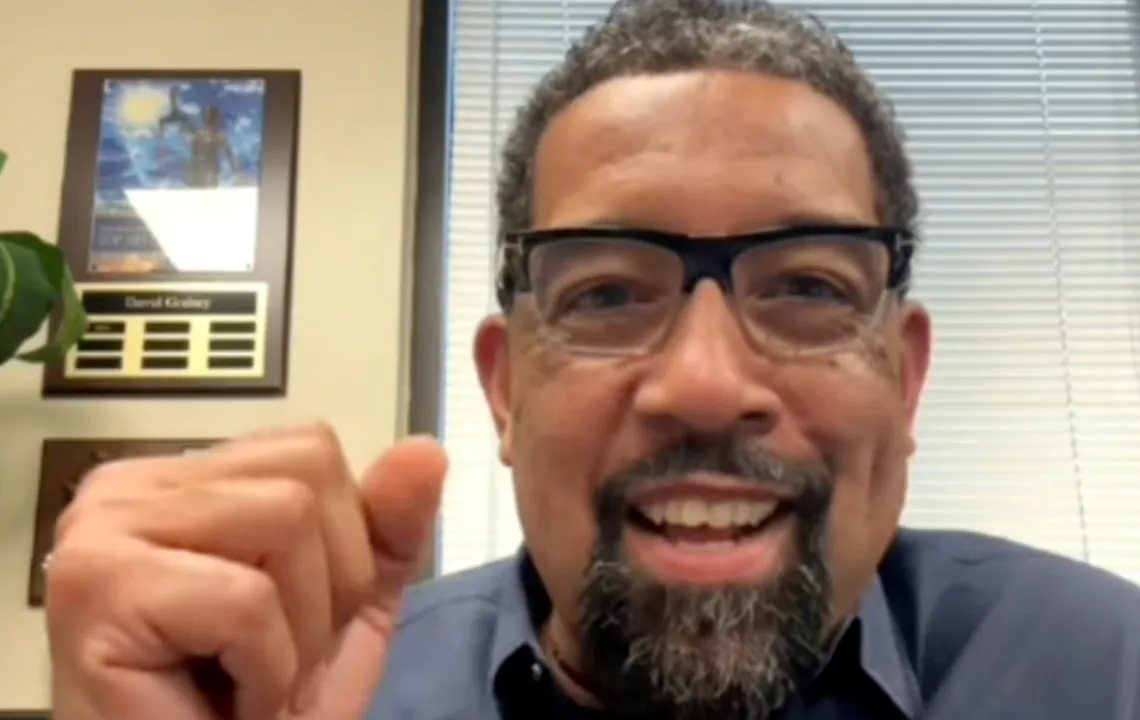
Meet David Godsey, the extraordinary Huston–Tillotson grad behind ‘I Just Got Hit’
There are slogans people recognize, and then there are slogans people repeat like they’re part of the culture. In Texas, “I Just Got Hit” is one of those phrases. It is more than a commercial line. For many families, it has become the first thing that comes to mind when an accident happens, and life suddenly feels unstable.
Behind that phrase is David Godsey, founder of The Godsey Law Firm, a proud graduate of Huston-Tillotson University in Austin, Texas, and an entrepreneur who built far more than a catchy message. He built a high-volume legal operation rooted in structure, consistency, and long-term thinking.
In this episode of HBCU Titans with Kenn Rashad, Godsey breaks down how his law firm grew from an idea into one of the most recognizable legal brands in the state. He also explains the core principles that helped him sustain growth, avoid common business mistakes, and build a legacy that goes beyond revenue.
Who is David Godsey?
David Godsey is a personal injury attorney with 20 years of experience. His firm is approaching its 19th anniversary. Before launching his own practice, Godsey worked as an insurance adjuster at Progressive Insurance, where he managed bodily injury claims and learned how insurance companies evaluate settlements.
That experience became foundational. Godsey said it gave him a deep understanding of how cases are handled from the inside. When he returned to the legal side, he applied what he learned to advocate for clients who would otherwise be negotiating against the same systems he once worked within.
Godsey eventually opened The Godsey Law Firm on January 2, 2007. He said the early years forced him to learn not only how to practice law, but how to run a real business.
What makes The Godsey Law Firm different?
Godsey said marketing alone does not create long-term success. He believes businesses survive when they combine visibility with competence, customer service, systems, and leadership.
He described marketing as an “ongoing conversation with the market,” and said consistency matters because most people do not need a personal injury attorney every day. The goal, he explained, is to remain visible enough that people remember you when the need finally arises.
Godsey also emphasized that substance has to match promotion. He said entrepreneurs sometimes focus more on growth than they do on sharpening their craft, and that imbalance eventually catches up.
He also spoke directly about customer service and reputation. Godsey said businesses are built through trust, and trust is protected by staying aligned with what clients expect, listening to feedback, and improving the experience over time.
Godsey described it as making real-time adjustments inside the business. He called them “in-game decisions,” and said leaders have to be willing to call audibles when something is not working.
He also stressed the importance of building teams and processes. Godsey said good people matter, but strong systems matter even more.
“People will let you down,” he said. “Processes never do.”
The origin of “I Just Got Hit”: a branding idea built on how people actually talk
Godsey said the phrase came from his former law partner, Justin Martin, during a period when they were trying to create advertising that people would remember. At the time, legal marketing in Texas was crowded and often built around loud slogans and aggressive messaging. Godsey said they wanted something that stood out without sounding forced.
Instead of trying to invent a clever tagline, they focused on language people already use in real life. Godsey explained that most people do not speak in legal terms after an accident. They say something simple and immediate.
“I just got hit.”
That became the foundation of the brand. They paired the phrase with a memorable radio commercial using children’s voices, which helped the message land quickly and feel natural to listeners. It also made the next step clear. The website name matched the phrase, so people did not have to remember a phone number or search for a business name.
Godsey said it also created an unexpected effect. Children remembered the commercial, and in some cases, they were the ones who told adults what to do after an accident.
The numbers behind the brand: a large-scale operation across Texas
“I Just Got Hit” is no longer just a recognizable phrase. It is part of a high-volume personal injury firm operating at a statewide scale.
Godsey said his firm employs approximately 140 to 145 people, with offices in Dallas and Houston and expansion underway in Austin and San Antonio. He also shared that the firm generated $150 million in recoveries for clients in a single year.
Godsey said the firm’s size did not happen by accident. He described growth as the result of continuous learning, constant measurement, and a commitment to building a firm that could operate with consistency across multiple cities.
A major setback that shaped his future
Godsey said becoming an attorney was not always his plan. He enrolled at Huston-Tillotson with the intention of becoming a pharmacist. He studied chemistry and expected to attend pharmacy school after graduation.
That plan changed over time. Godsey became heavily involved on campus, joined Kappa Alpha Psi, served as student government president, and began thinking about politics. He said the path toward politics eventually led him to law school, because many politicians come from legal backgrounds.
Godsey entered law school at Texas Southern University immediately after earning his undergraduate degree, but his first attempt ended abruptly. He failed out after his first year. Godsey said it was devastating, not only because he lost the opportunity, but because he knew he had not put in the work required to succeed.
He said he spent several days blaming the school and circumstances before confronting the truth.
He blamed himself.
Godsey described the moment as painful because it forced him to accept that he had wasted a full year by not taking the process seriously. That lesson stayed with him and became one of the most important turning points in his life.
The job that gave him the blueprint
After leaving law school, Godsey said he took a job waiting tables at Bennigan’s while searching for work. One night, he served a customer who asked him what he did. Godsey told him he had just flunked out of law school and needed a job.
The customer told him a company had recently fired someone and may be hiring. The next day, Godsey showed up in a suit, interviewed, and got hired at Progressive Insurance.
Godsey later learned the customer received a referral bonus for helping him get the job. Still, the opportunity changed his life.
Godsey spent the next eight years working in the insurance business. He said those years taught him how insurance claims work, how settlements are evaluated, and how outcomes are often influenced by negotiation strategy and preparation.
Godsey eventually returned to law school, graduated in 2004, and entered the legal field with a different level of readiness. He said his insurance background gave him practical knowledge most attorneys never develop early in their careers.
Learning the business side of law after the degree
Godsey said law school did not teach him how to run a business. He said many professional schools focus on technical skills but do not teach fundamentals such as budgeting, cost control, hiring, marketing strategy, and systems.
He said he initially believed the process would be simple. He would get clients, handle their cases well, and the money would follow.
That mindset changed once he started tracking real costs. Godsey said business owners often focus on revenue without understanding how expenses grow underneath it. He explained that some businesses increase income but grow expenses even faster, leaving them with less profit despite the appearance of progress.
He said that is why entrepreneurs have to understand the data behind how the business operates.
Godsey encouraged entrepreneurs to keep learning. He said business owners have to self-educate continuously through books, seminars, mentors, and any other resources available, because formal education rarely covers what owners actually need to know.
He also compared every business to a lemonade stand. Owners have to understand costs, time, and profit. They have to know how much each sale requires and whether the work is sustainable.
Serving clients while staying profitable
Godsey said he does not view profit and service as opposing goals. He believes doing the right thing for clients is the best long-term strategy for staying profitable.
He said the business model only works when you know what it costs to acquire a client and what it costs to deliver results. When those numbers are measured correctly, profit becomes something that can be sustained rather than hoped for.
Godsey said a business cannot survive without profit, but he believes the better approach is to focus on delivering outcomes the right way. He said owners who operate with integrity, discipline, and attention to service will often find that the revenue takes care of itself.
Why does he rarely go to court now
Godsey said he almost never spends time in the courtroom anymore. He said his main responsibility now is management, leadership, and keeping the firm operating at a high level.
He described his work as focused on team leadership, weekly meetings, performance metrics, and daily pace. He said the firm emphasizes daily execution rather than tracking results on a monthly basis.
Godsey said he still gets involved in certain cases, especially those involving catastrophic injuries or wrongful death, but he is no longer operating as a trial lawyer day-to-day. He is focused on maintaining operations and ensuring the organization runs smoothly.
How the firm is using AI to improve efficiency
Godsey said the firm has already implemented AI into parts of its workflow, and he believes it will become even more important in the coming years.
He explained that tasks that once took attorneys’ hours can now be completed much faster. He specifically mentioned the ability to summarize medical records, identify key issues such as gaps in treatment, and extract important details with greater speed.
He also said AI is helping the intake department track calls more accurately by identifying out-of-scope inquiries. Godsey said those calls were once tracked manually, but AI now makes it easier to capture and analyze that data.
Godsey said the firm is still early in the process. He believes businesses that refuse to adapt will eventually decline. He also said AI should not be viewed as the enemy of human workers.
He described the relationship this way: humans are smart, AI is smarter, but humans plus AI is the strongest combination.
Expansion, new markets, and preparing for what’s next
Godsey said the firm’s future is focused on expansion across Texas. He said he has no current plan to expand outside the state because there is still a significant opportunity inside Texas.
He also said the firm is working to become more litigation-based. He explained that when cases enter litigation, clients often receive higher outcomes than cases that settle early. He said the discovery process gives attorneys more leverage because it reveals information that strengthens negotiations.
Godsey also believes personal injury will eventually change as technology evolves. He pointed to improved vehicle safety and self-driving developments as factors that could reduce accidents over time.
Because of that, Godsey said the firm has already created a homeowners insurance claims department as a long-term backup. He described it as a strategic move that could become more important in the future.
The legacy he wants to leave
Godsey said legacy matters more than money. He said he wants people to feel positive when his name is mentioned.
He said he wants to be remembered as someone who cared about the community, created opportunities for others, and encouraged people to believe they could achieve what they set out to do.
Godsey also said family remains his priority. He expressed pride in seeing his daughter become an attorney and join the firm, and he said he values being able to shape young professionals through mentorship and leadership.
He said he does not measure his legacy by case results or earnings. He measures it by character and impact.
In his words, he wants people to remember him as “a pretty good guy.”
Key takeaways from this episode
Strong branding works best when it reflects real language people already use.
Visibility is important, but marketing must be backed by real performance and service.
Revenue alone does not define success. Owners must understand costs and profit.
The best leaders build systems, train teams, and measure daily execution.
AI is changing business operations, but companies still need people and leadership.
Expansion requires understanding the culture of each market, not just the strategy.
Legacy is built through community impact, mentorship, and integrity.
Connect with The Godsey Law Firm
Website: https://ijustgothit.com/
Subscribe to HBCU Titans
If you’re enjoying these conversations and want more stories like this, subscribe to the channel and turn on notifications so you don’t miss the next episode.
Related Content